

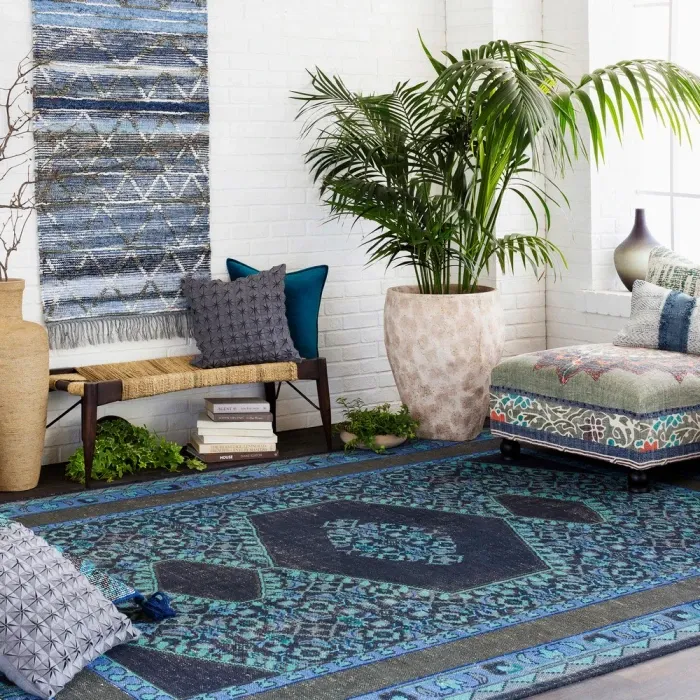
Homes with active families experience constant movement. Children play on the floor, pets move between rooms, and furniture often serves several purposes throughout the day. These everyday activities make rug selection more complicated than simply choosing an attractive pattern.
A suitable rug should support household routines without sacrificing visual appeal. Understanding different fibers, construction methods, and surface textures helps homeowners choose floor coverings that remain comfortable and manageable through ordinary use.
Consider How Each Room Is Used
Not every room requires the same type of rug. A formal sitting room may receive occasional visitors, while a family room might accommodate homework, television, games, and everyday relaxation. The amount of activity influences the most appropriate materials and construction. Spaces experiencing regular movement generally benefit from rugs designed to tolerate frequent foot traffic.
For instance, collections of Surya rugs include different styles, materials, and construction types. Comparing these characteristics allows homeowners to consider options according to the needs of individual rooms. A rug selected for a bedroom may prioritize softness, while one placed near a busy seating area may need a more practical surface. Thinking about the room’s primary purpose helps narrow the choices.
Why Surface Construction Matters
A rug’s appearance does not always reveal how it will perform. Two similar-looking designs may differ considerably in pile density, backing, fiber composition, and cleaning requirements. Low-pile rugs are often practical where chairs need to move easily or frequent vacuuming is necessary. Their shorter fibers also create a relatively smooth surface beneath furniture.
Thicker rugs can provide additional softness, making them appealing for areas where people frequently sit or relax on the floor. However, their suitability depends on maintenance needs and the specific product. Before purchasing, examine available construction details rather than relying entirely on product photographs. Understanding the rug’s structure can help prevent mismatched expectations.
Managing Everyday Spills and Cleaning
Accidental spills are difficult to avoid in family homes. Drinks, snacks, muddy shoes, and ordinary dust can affect even carefully maintained interiors.
Rug materials respond differently to moisture and cleaning products. Some synthetic fibers resist certain stains better than others, while natural fibers may require more specialized maintenance.
A few practical habits can simplify rug care:
-
Blot spills promptly rather than rubbing them into the fibers.
-
Vacuum according to the manufacturer’s recommendations.
-
Check cleaning labels before applying household solutions.
-
Use suitable rug pads to help reduce unwanted movement.
-
Arrange professional cleaning when required by the material.
These habits do not guarantee protection against every stain, but they can reduce unnecessary wear and cleaning difficulties.
Introduce Patterns Without Overcrowding a Room
Busy households do not need to compromise on design. Patterns can provide visual interest while making certain small marks or everyday irregularities less noticeable. Geometric motifs work well with simple furniture arrangements, while traditional-inspired designs can add warmth to neutral interiors. Multicolored rugs also help connect accessories that contain several complementary shades.
Options within Dalyn rugs provide another starting point for exploring different decorative patterns and color combinations.
When evaluating patterned rugs, consider their relationship with existing upholstery. If the sofa features a strong print, a quieter rug may produce a more balanced appearance.
Choose Appropriate Sizes for Shared Spaces
Family rooms often contain sectional sofas, coffee tables, storage furniture, and additional seating. A small rug placed only beneath the coffee table can make these elements appear visually disconnected. Larger rugs can help organize the furniture arrangement and establish a common seating area. However, dimensions should be measured before purchasing.
Use painter’s tape to outline the proposed rug placement on the floor. This simple technique helps homeowners assess how much visible flooring will remain and whether furniture legs will sit comfortably on the rug.
Also examine walking routes and doorway clearance. Thick rugs positioned near doors may interfere with opening and closing.
Think About Long-Term Flexibility
Family needs change over time. A room that currently serves as a children’s play area may eventually become a study space or secondary living room. Choosing a rug that complements the home’s broader color scheme can make future furniture changes easier. Versatile patterns and balanced tones may work with several decorating styles.
Durability should be considered alongside appearance, particularly in spaces that undergo frequent rearrangement. A rug suited to everyday household activity can remain useful even as the room’s purpose evolves.
Conclusion
Selecting a rug for a busy household requires attention to comfort, construction, maintenance, and room layout. Materials should be evaluated according to actual use rather than appearance alone, and practical considerations such as cleaning and furniture movement deserve equal importance. Homeowners comparing different designs can explore the collections available through RugsTown.com, which brings together multiple rug brands and styles. Careful selection helps create family spaces that feel welcoming while accommodating changing routines and everyday household demands.
